
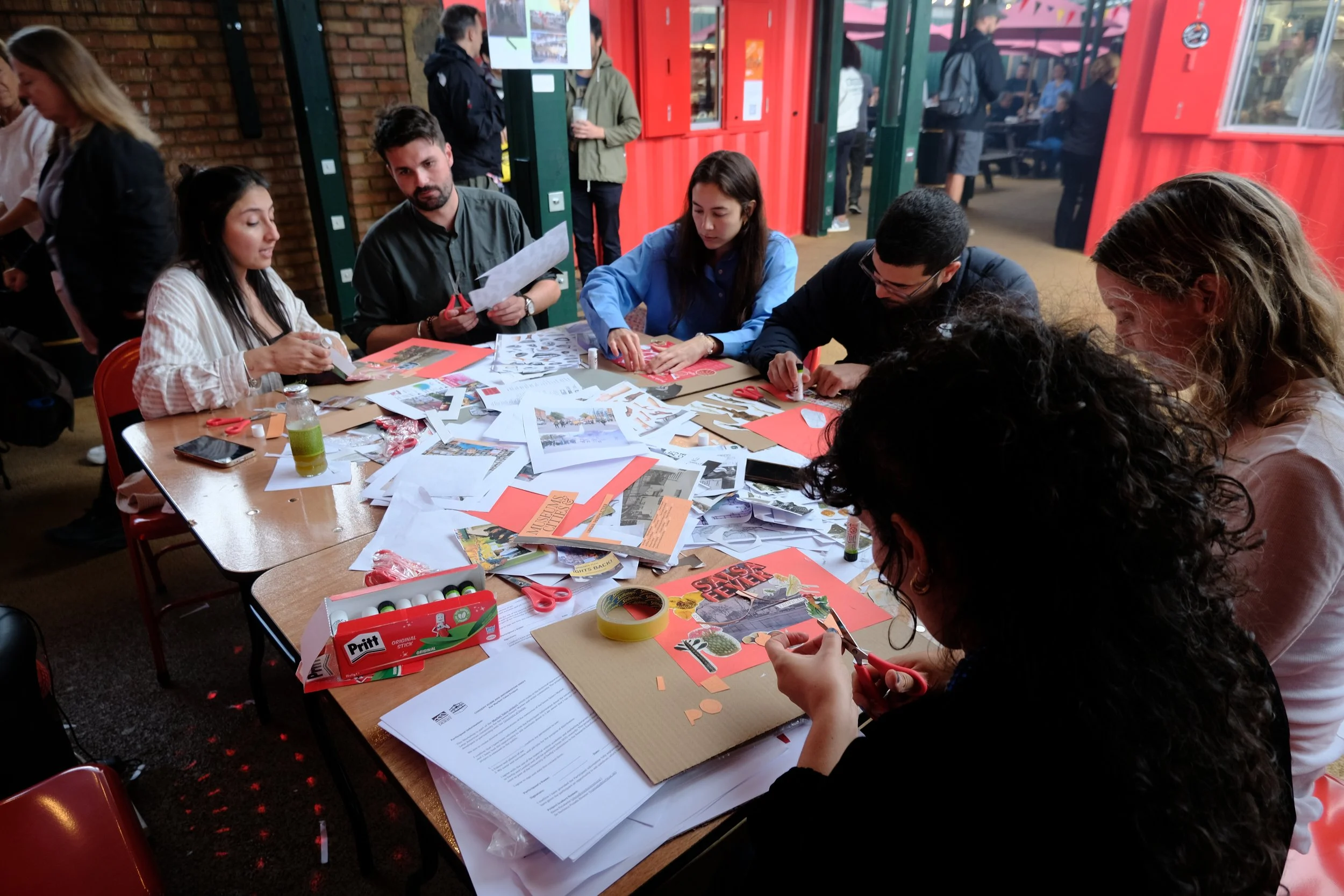
Tottenham solidarity summer
A summer of community ownership, care and collective action
The people of Tottenham have fought hard to protect the spaces that hold our communities together, places that have faced demolition, closure, privatisation or being sold off.
This summer, we want to show what becomes possible when communities are not simply consulted about their neighbourhoods, but are given the space, resources and power to shape them.
Across Tower Gardens, Wards Corner and Down Lane Pavilion, Tottenham Solidarity Summer will bring together local organisations, families, campaigners, neighbours and volunteers through a shared programme of free food, activities for children and families, community education, fiestas, fairs, assemblies and opportunities to organise and learn together.
At the heart of the programme are three interconnected principles: Fiesta, Food and Community Pedagogy.
These are not separate strands of activity. They will run transversally through the programme, creating different ways for people to meet, participate, learn from one another and imagine what community ownership can look like in practice.
-
Communities have a right to joy.
We believe recreation, celebration and collective joy should not be privileges.
For many families, everyday life is shaped by work and multiple responsibilities of care, within the home, but also across extended families, neighbourhoods and communities. Having time and space to rest, dance, play, celebrate and simply enjoy being together matters.
Fiesta is therefore more than an event or a few hours of entertainment. It can be a way of creating connections, strengthening relationships and transforming an ordinary moment into a collective experience.
Throughout Solidarity Summer, fiestas and creative activities will create spaces where different generations and communities can come together. Celebration becomes a form of community-building: a way of meeting one another, creating memories and strengthening the relationships from which longer-term collective action can grow.
-
Against food deprivation. For community nourishment.
Food is a basic need, and the challenges of food insecurity become particularly visible during the school holidays, when many families lose access to free school meals while already facing increasing living costs.
Our programme responds directly to this reality through free community meals. But we also understand food as something that goes far beyond physical nourishment.
Across cultures and communities, preparing, sharing and eating food together has always created spaces of encounter. Around a table, a kitchen or a shared pot, people exchange stories, knowledge, memories and experiences. Relationships are built, informal support networks emerge, and conversations that might not happen in formal settings become possible.
Community kitchens and collective meals have also played an important role in movements for housing, workers' rights, migrant justice and neighbourhood organising across the world. Feeding one another can become an act of solidarity and collective care.
At the same time, we recognise that the work of feeding and caring for communities is not distributed equally. These responsibilities have historically fallen disproportionately on women, whose often invisible labour sustains families, neighbourhoods and networks of solidarity.
-
The community creates. The community cares. The community teaches.
Tottenham holds an extraordinary amount of knowledge. Decades of local campaigns and collective struggles have generated practical knowledge about how communities can organise, protect spaces, develop community plans, raise funds, mobilise volunteers, create organisations, negotiate with institutions and imagine alternative ways of owning and managing neighbourhood assets.
Much of this knowledge does not live in textbooks or institutions. It lives within people: residents, traders, campaigners, parents, community leaders, local organisations and the networks that have sustained these struggles over many years.
Solidarity Summer starts from the idea that everyone has something to learn and everyone has something to teach. Through workshops, drop-ins, informal conversations, practical activities and technical support, we want to create spaces where this knowledge can circulate between communities.
This includes learning about retrofit, democratic and community ownership, fundraising, governance, taking on leases and building sustainable organisations, but also learning how to care collectively, create networks of support and organise around shared challenges.
Community pedagogy means recognising communities not simply as recipients of information or services, but as producers of knowledge in their own right.
our spaces
Our Tottenham family includes..
Tower Gardens (Former children’s centre)
Wards Corner (Latin market ‘Pueblito Paisa’ and community hub)
Down Lane Pavilion (Former nursery and community cafe)
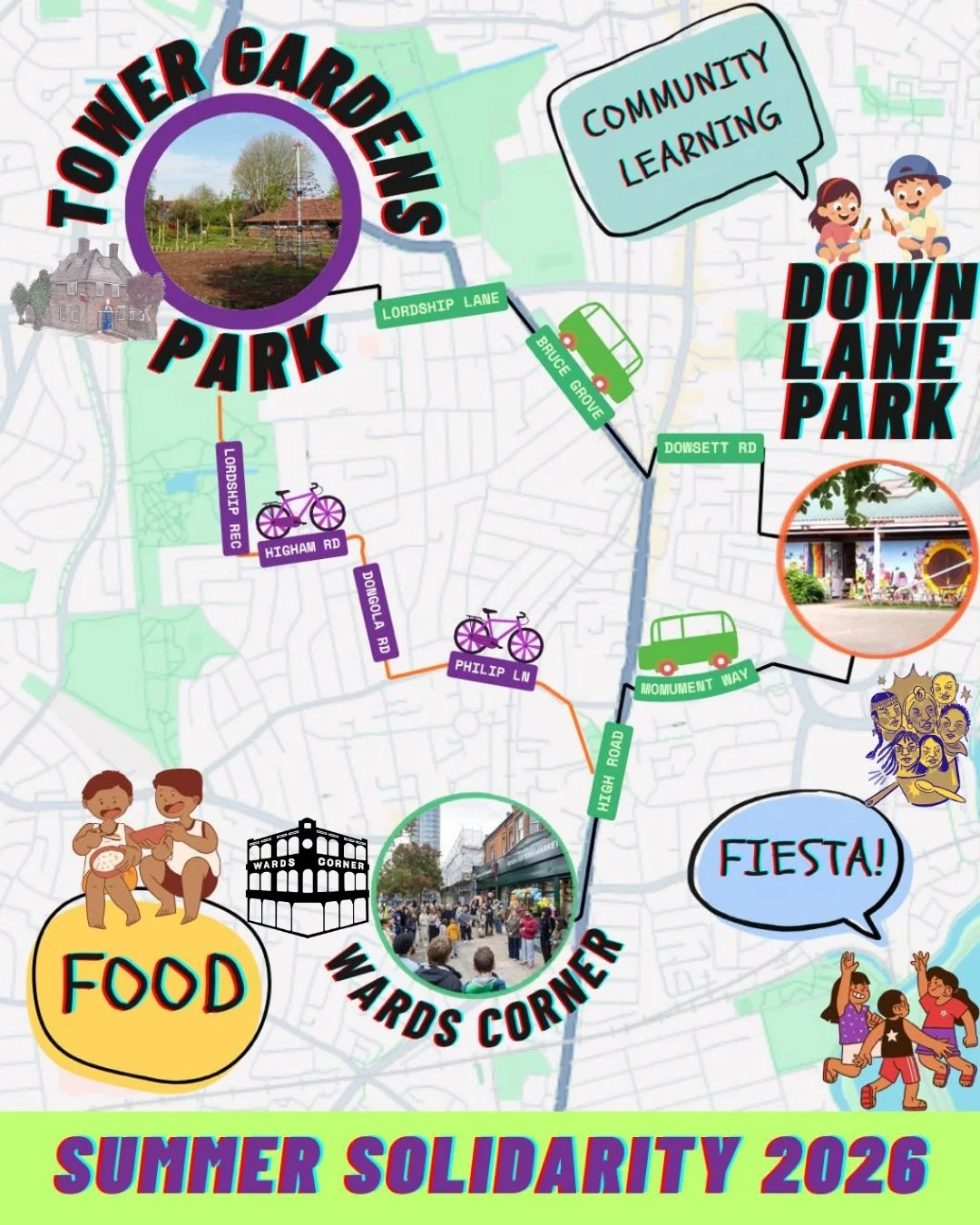
our summer plan
Across these three spaces we will run…
- A daily programme of free lunches and kids activities
- Community education on retrofit, democratic ownership, solidarity with local and international struggles
- Family fiestas, fairs and carnivals every weekends
- Assemblies to build our shared visions and the practical steps to make them happen
💛 = Wards Corner CBS / 💚 = Tower Gardens Community Corner / 💜 = Tottenham Families Fight Back
our dreams
For local families, the crisis of food and childcare over the summer is real. But this programme is about more than surviving the school holidays. This is how we rehearse long-term community ownership and control.
Through making things happen together, we build real cooperation between local groups. Through technical support, practical advice and community education, we strengthen the capacity, knowledge and partnerships communities need to take on leases and successfully run these spaces themselves.
We also want to prove that other ways of doing things are possible. Solidarity Summer is an opportunity to demonstrate to local authorities, through practice, that community-led models are not only ambitious ideas, but feasible, effective and sustainable alternatives. By putting them into action, we can build a stronger case for the long-term protection and community ownership of our local spaces.