

The Wards Corner Community Plan
The Community Plan goes beyond the co-design process for the future permanent Seven Sisters Market. It builds on more than 20 years of fighting back, organising, campaigning and collaboration between traders, local residents and community organisations, and asks a simple question:
How can the Market continue to serve its community for generations to come?
The Community Plan comes to life through the everyday life of the Market: through activities, programmes and events in the Community Space; conversations with traders, residents and visitors; La Salita Urbana and market-wide celebrations; the collaborative design of the future Seven Sisters Market; and partnerships with organisations across the local area and London.
The future of Seven Sisters Market isn't only about designing a building. It's about strengthening a community, building connections and creating the conditions for people to have a meaningful role in shaping the places they use. It is also an opportunity to demonstrate another way of making cities: one that starts with community knowledge, collective skills and the power of people to shape their own places.
In many ways, this is about building the city otherwise. To guide this work, the Community Plan revolves around four interconnected workstreams:
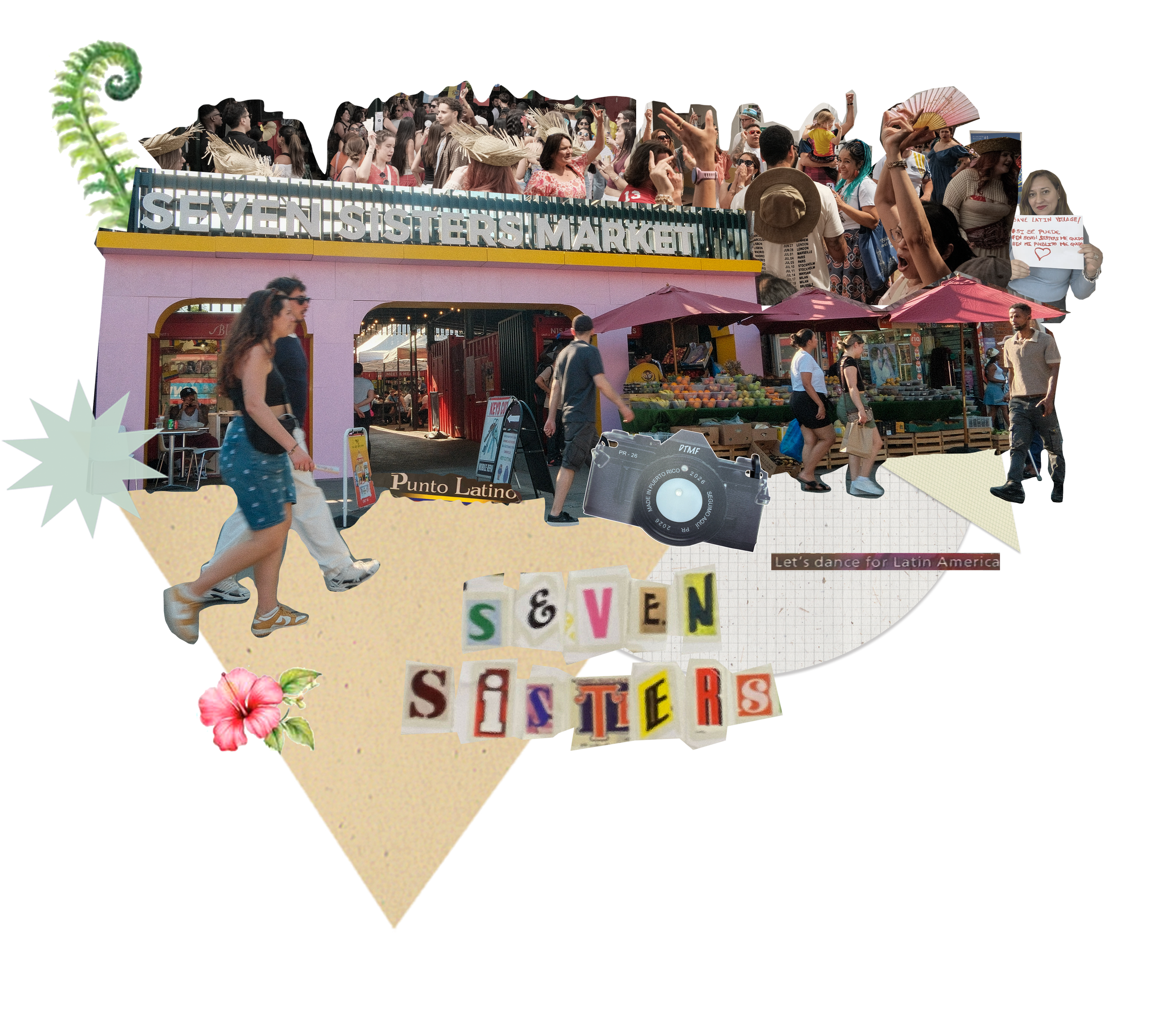
Collage credits: Dr. Verónica Posada
1. Culture & Heritage
Celebrating the stories, identities and traditions that make Seven Sisters Market what it is.
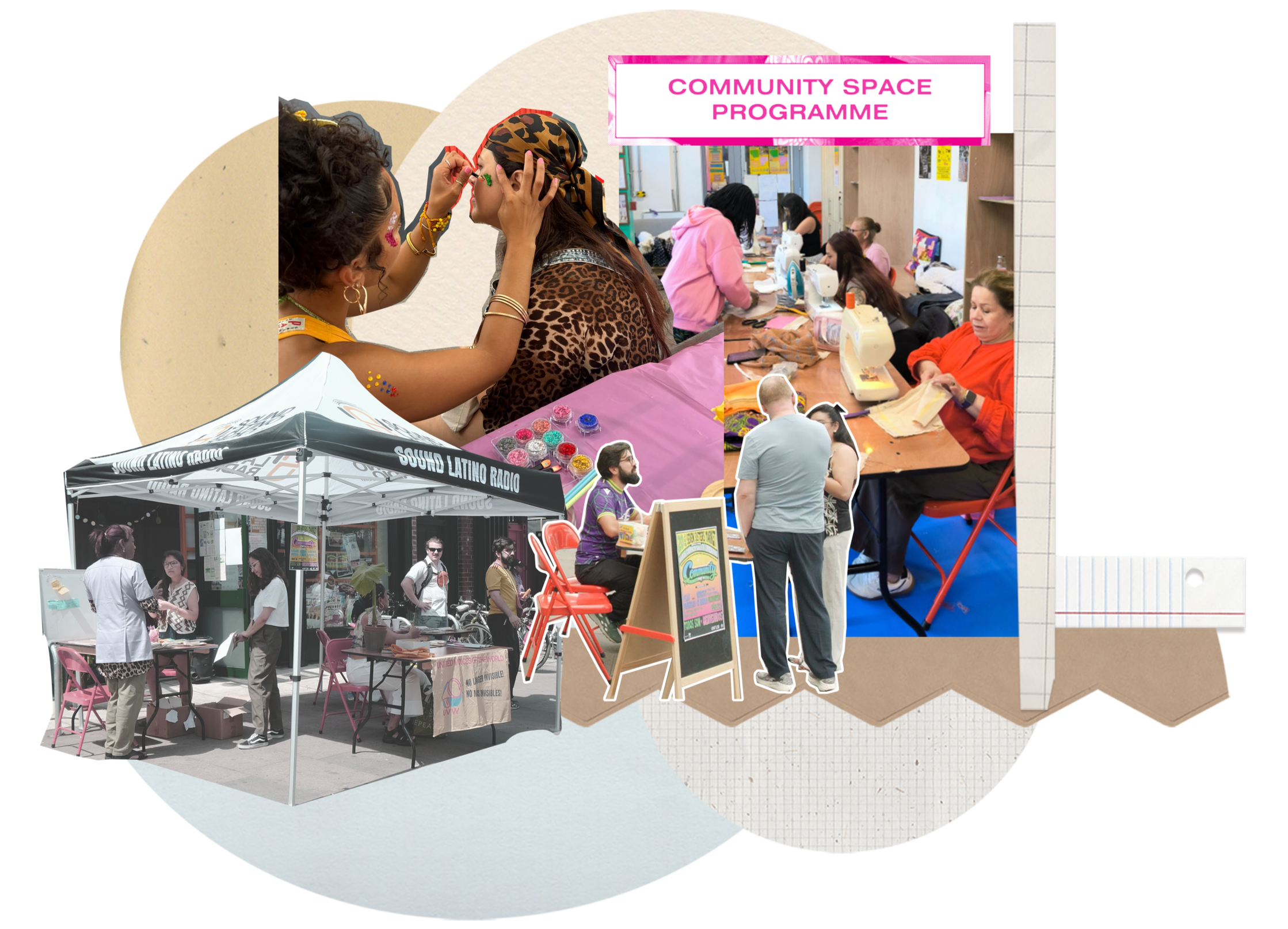
Collage credits: Dr. Verónica Posada
2. Community Care
Responding to community needs and expanding networks of support, wellbeing and belonging.
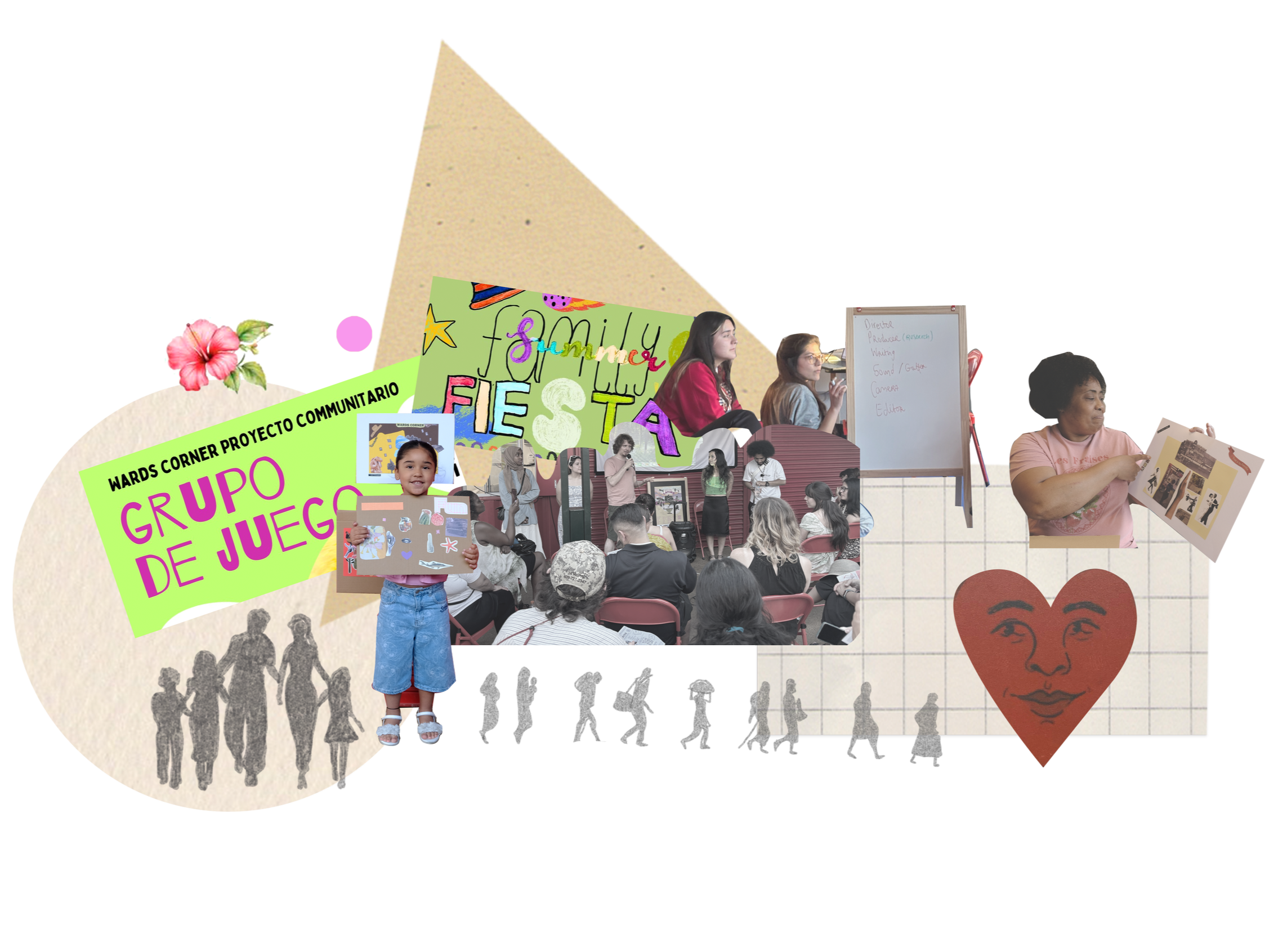
3. Community knowledge & youth
Creating spaces for learning, sharing skills and supporting the next generation.
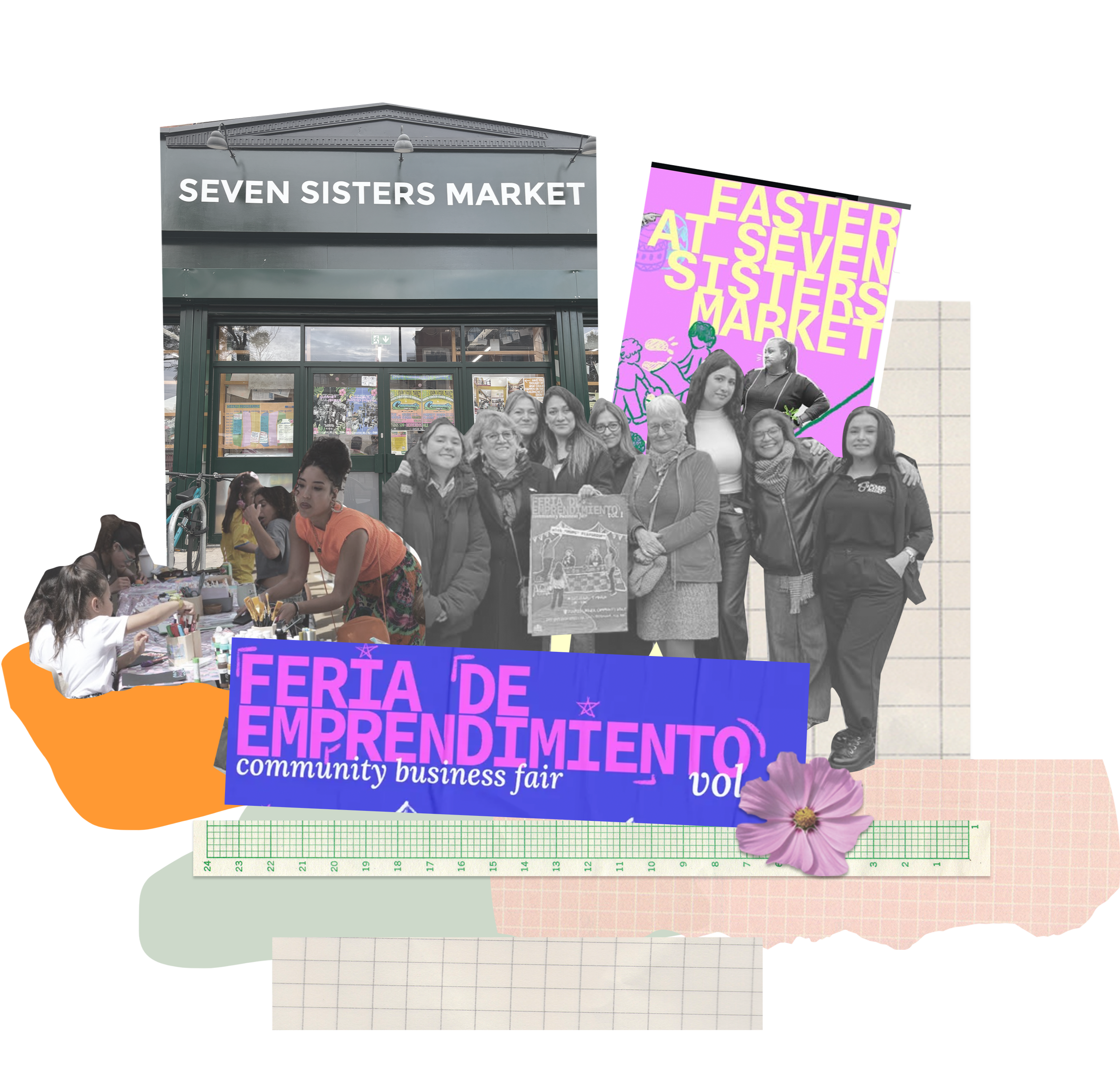
Collage credits: Dr. Verónica Posada
4. Community wealth building
Supporting traders, local businesses and creating opportunities for communities to thrive locally.
Bringing Wards Corner back to life
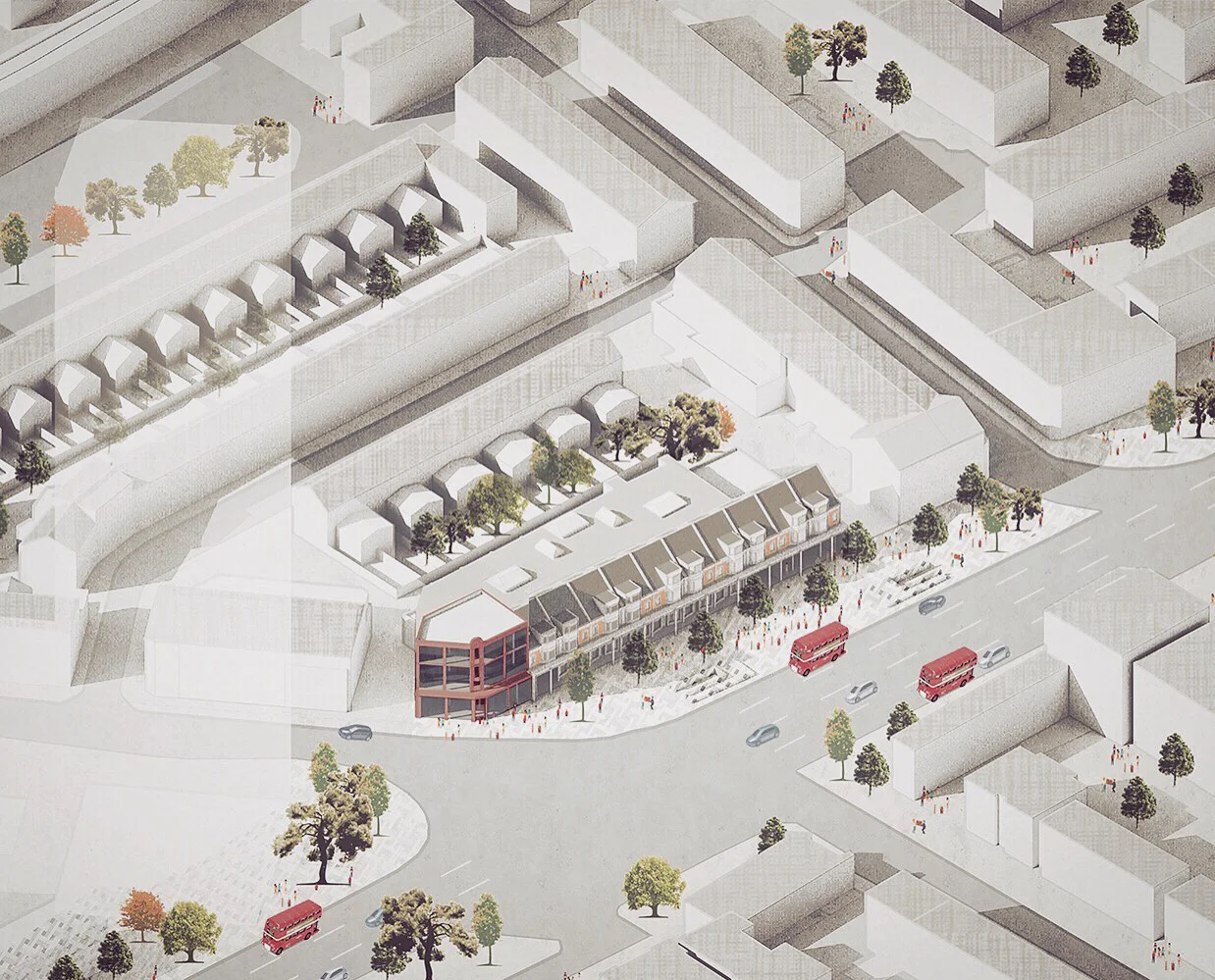
At the heart of the Community Plan is a commitment to bring the Wards Corner building back into use through a community-led refurbishment — protecting its heritage while creating a Market that can respond to the needs of traders and the wider community for generations to come.
Rather than starting again, the proposal builds on what already makes Seven Sisters Market unique: its traders, cultures, relationships and its role in the everyday life of Seven Sisters and Tottenham.
A fundamental part of this process is co-creating the future layout of the Market with traders. Through ongoing conversations and design sessions, traders are helping to explore how trading units, circulation, storage, seating and shared facilities should work in practice. Their everyday knowledge of the Market is essential to creating spaces that are functional and welcoming, while supporting existing traders and creating opportunities for new small and independent businesses.
But the opportunity extends beyond the ground-floor Market.
The refurbishment creates the possibility of bringing the first and second floors of Wards Corner back into meaningful use, opening up parts of the building that have been underused for many years. Alongside trading and café spaces, we are exploring how Wards Corner can accommodate affordable workspace, community organisations, cultural activities, learning and places where people can meet, organise and share knowledge.
Bringing these different uses together has the potential to establish Wards Corner as a community anchor: a place where local enterprise, culture, community infrastructure and everyday life can coexist under one roof.
Through the Community Plan, we aim to:
Provide improved trading spaces for all existing traders while creating opportunities for new small and independent businesses.
Celebrate and strengthen the unique identity and culture of Seven Sisters Market, ensuring that the communities that have shaped it remain at the centre of its future.
Protect and refurbish the historic Wards Corner building, recognising its architectural heritage and its important place within the character and integrity of the High Road.
Bring the first and second floors back into meaningful use, creating opportunities for community, cultural, learning and small-business activities alongside the Market.
Create a Market that is self-managed by the community, building long-term collective ownership and stewardship into how the space operates.
Strengthen connections between the Market, the building and the surrounding streets, making Wards Corner a more open and welcoming place within Seven Sisters.
Establish Seven Sisters as a community gateway to Tottenham, with Wards Corner acting as an anchor for local culture, enterprise and community life.
The opportunity is not simply to refurbish a building, but to bring Wards Corner back to life as a whole — creating a place where trading, culture, community activity and local enterprise can coexist, and where the people who have fought for and sustained the Market continue to have a meaningful role in shaping its future.

Ground floor Plan of the Old Seven Sisters Market
from saving the market to shaping its future
The Community Plan has its roots in a long history of community organising around Wards Corner and Seven Sisters Market. For more than two decades, residents, traders, architects, activists and community organisations have worked together to protect the Market and champion a community-led alternative for Wards Corner.
Community campaigns and organisations, including Save Latin Village, fought to protect the cultural, social and economic value of Seven Sisters Market and raise awareness of the rights of the local Latin American community. In 2016, this collective effort successfully defeated the Compulsory Purchase Order, preventing the demolition of the Market — a recognised community and architectural asset and home to one of the largest concentrations of Latin American businesses in the UK.
Previous Community Plans
The current Community Plan represents the fourth iteration of a community-led design process that began in 2007. While certain aspects of the scheme have evolved in the twelve years since the very first iteration was conceived, the core philosophy to protect and celebrate the existing market has remained in tact.
-
The very first plan sought to upgrade the ground floor market, renovate the front facade of the corner site and terraced building and provide additional office, retail and cafe space. On the second floor, the scheme proposes 8 one bed flats. In addition to the alterations to the corner site and market building, the scheme details potential affordable housing accommodation in the surrounding block, estimated at approximately 200 units.
Ref. HGY/2008/0177
-
This iteration follows the ethos of the first scheme quite closely. The scheme centres on the refurbishment and renovation of the exteriors of the corner site and terraced building, improvements to the internal layout of the market and proposals for the expansion of retail, office and cafe/restaurant floorspace.
Ref. HGY/2011/1275
-
This third scheme, submitted after a long and comprehensive period of consultation, significantly evolves the second and first iterations: it retains and enhances historic elements of the building; maximises the vacant space on the corner site and first floor to provide additional retail and office space; and reconfigures the ground floor market layout to echo the historic plan of the department store, including the reinstating of a grand central staircase to the first floor and original lightwells. An exterior canopy is proposed to emphasise the market’s presence on the High Road.
Ref. HGY/2014/0575
But protecting the Market was never the end of the story. Today, the next chapter is being co-created.
Architecture 00, the design practice leading the permanent Market project, is working alongside Wards Corner Community Benefit Society (CBS), UNIT38 — an architectural cooperative with its origins in Seven Sisters Market — and Places for London to develop the design of the permanent Market.
Together, we are working towards a long-term vision with the Market traders themselves, ensuring that the future of Wards Corner continues to be shaped by the people and communities that fought for it, sustained it and continue to make it what it is today.
Listening, Learning and Co-Producing
The Community Plan continues to evolve through ongoing conversations, collaboration and co-production with the people who use and sustain Seven Sisters Market.
Today, this work happens at different scales — from detailed conversations with traders about their future trading spaces to wider discussions about what Wards Corner can offer its communities in the years ahead.
A fundamental part of this process is working directly with Market traders to co-create the layout of the permanent Market. Through dedicated design sessions and everyday conversations, traders bring their practical knowledge and experience into the design process, helping us explore how trading units, storage, circulation, seating, shared facilities and other spaces should work.
Alongside this, we engage the wider community through our series of drop-in Urban Rooms, where we seek to create an open space to listen, exchange knowledge and collectively explore what people want from Wards Corner — from the activities, services and opportunities they would like to see in the Community Space today to their aspirations for the permanent Market and the wider neighbourhood.
But participation does not only happen through formal workshops. It also happens through everyday conversations in the Market, community activities and programmes, celebrations, collaborations with local organisations, and the relationships built over time. Together, these different forms of engagement help us understand how Wards Corner can continue to respond to the communities around it.
Community knowledge, ideas and lived experiences can therefore continue to inform, challenge and shape the design as it evolves. For us, co-production is not a single consultation exercise. It is an ongoing relationship between people, place and design — one that recognises traders and communities not simply as users of a future building, but as active participants in shaping its future.